International Women’s Day - NAJ Celebrating the Achievements of Successful Women in Our Industry II
03 Mar 2023
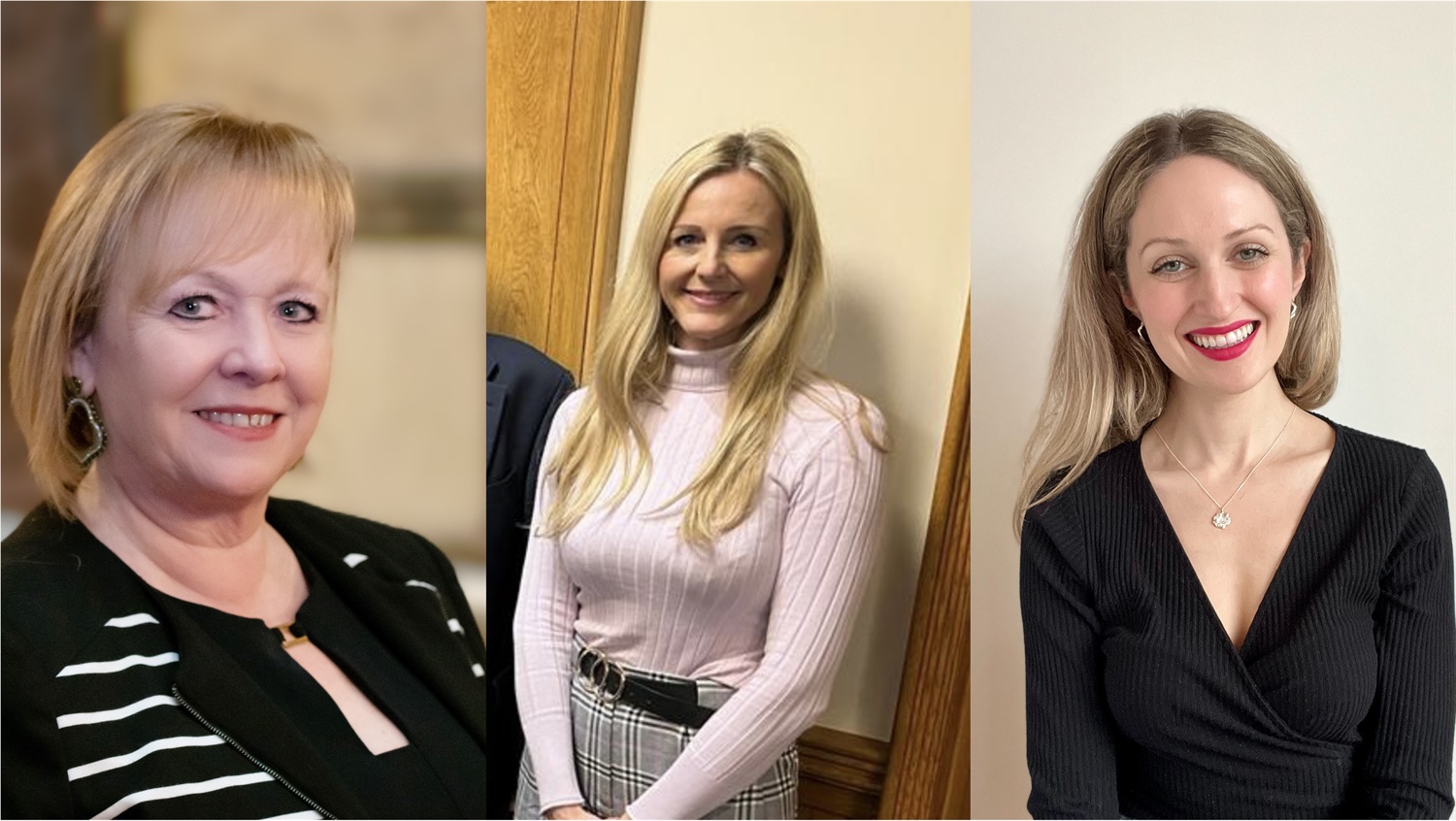
With 2023's campaign theme #EmbraceEquity, today is International Women's Day. Equity means creating an inclusive world. We mark this day – and continue for the next two days – by celebrating the achievements of successful women in our industry, who talk about their jewellery journeys, female empowerment and inequality issues.
ANNE MARIE REEVES, Chair, Goldsmiths' Craft & Design Council (GC&DC)
Describe your jewellery journey up to this point in your career.
For over 30 years, I've been involved in the diamond, jewellery and wider industry. After qualifying as a bi-lingual secretary, I joined De Beers/DTC. I worked my way up to managing the UK Diamond Promotion Service handling the trade marketing and education programmes alongside my involvement with international projects.
The skills and expertise I acquired during this time laid the foundation for using my knowledge to work with Sightholders, jewellery designers and independent marketing consultancy offering training and educational advice.
Using my knowledge and experience, I'm now chair of the GC&DC, whose remit is the pursuit of excellence within design and craftsmanship working within silversmithing, goldsmithing, jewellery and allied crafts. It's an opportunity to help young jewellery designers find their feet in an ever-evolving industry and give back to the industry I love.
Would you say that being a woman has had an impact on your career? Do you think women have had to work harder to be more 'visible'?
I think anybody in any industry has to prove their worth, especially women. In my long career, women were generally typecast into admin and support roles and were not overtly encouraged to be promoted to management. The transition to a more senior role took time and energy to prove my skills for the forward move in my career. Once that move was achieved, it became easier to be recognised for other skills.
The '80s saw the biggest change for me, as women took more senior roles within the marketing and advertising industries, and first-hand experience showed that women managers had to fight for more equality and respect from their peers and seniors. The phrase' political correctness' came into its own. This was a sign of the times then, and women had to often 'prove' themselves, but it did lead to them taking more senior roles eventually. They broke the mould, and now the industry has seen many more women taking the lead in important roles and positions.
Does the jewellery sector actually offer workplaces where women can thrive?
Yes, I do think it offers more opportunities for women than ever, and more women are taking the initiative and starting their own businesses. I think jewellery has a diverse community and now respects skills and potential and judges on merit rather than gender. This is particularly evident with the GC&DC annual competition, where the entries are judged on merit, and the surprise at the Awards Ceremony is to see who won which prize – totally judged on talent.
What does 'female empowerment' mean to you? Does it allow the promotion of self-worth and/or the ability to influence change?
For me, it's about 'confidence and effecting change'. We see this happening in gemstone and jewellery projects worldwide, where the smaller initiatives that are developed will eventually build into much larger projects resulting in a change to lives and future generations.
There seems to be a change in approach from stereotyping careers with young people, too, opening a world of opportunity for future generations. Girls and young women are encouraged to follow their dreams through confidence building, encouragement and education. It's very encouraging to see small women's cooperatives and initiatives within our industry, from the mine to the finger.
KATIE GILLESPIE, Compliance Manager, NAJ
Describe your jewellery journey up to this point in your career.
My first job at 18 was in a gemstone dealer in the Jewellery Quarter. I used to enjoy telling people what I did as it always sounded glamorous. I stayed there for ten years, predominantly because I loved the people so much, but then it was time for a change.
My change of direction was quite radical; I went to work for Aldi, fast becoming a store manager and training other management. It was fast-paced and high-pressure, but I thrived in that environment. The one stand-out thing at Aldi at that time was that only one in eight managers were women, so to climb the ranks so fast and be one of the few women managers felt like an achievement. My competitive nature meant that I always wanted to show that women can lead as well as, if not better than, their male counterparts.
After eight years at Aldi, the jewellery industry called me back into a role where all my skills could be utilised – compliance and policy manager at the NAJ. This role calls for in-depth jewellery knowledge, diplomacy and experience with consumer complaints. It's a niche compliance role, but my previous jobs have equipped me with the perfect background to handle whatever comes my way.
Would you say that being a woman has had an impact on your career? Do you think you have had to work harder to be more 'visible'?
I was raised in a family where we did lots of activities and sports, and from a very young age, I would push myself to 'keep up' with my dad and his friends. Throughout my life, I've had the attitude that if a man can do it, I WILL do it, and I will try to do it better just to prove a point.
Does the jewellery sector (in general, or your part of it) actually offer workplaces where women can thrive?
I feel complete inclusivity in my workplace; there is no inequality or discrimination in the NAJ, and everyone is treated with identical respect. The bi-product of this is that anyone can speak up and feel heard, regardless of gender or any other protected characteristic.
RACHAEL TAYLOR, jewellery journalist, editor and author
Describe your jewellery journey up to this point in your career.
My first real step into the jewellery industry was as news editor at Retail Jeweller in 2008. After being made redundant a year later, I was approached by publisher ITP to launch a new jewellery business magazine, which would become Professional Jeweller. I also launched WatchPro magazine while at ITP, and we had lots of associated events, such as the Hot 100 project, that celebrated the faces of our industry.
After the birth of my second child, I became freelance to have more flexibility in my life. That baby turns nine this month, and I'm still freelancing. During these years, I've written for many publications, including The Financial Times, The Telegraph, The Independent, Rapaport and The Jewellery Editor. I also regularly contribute to Retail Jeweller and copywrite and consult for industry brands and retailers. Last year I published two books – Cartier: The Story Behind the Style and Tiffany & Co: The Story Behind the Style. I'm also a judge for many competitions, including The Goldsmiths' Centre's Spotlighting initiative and the UK Jewellery Awards. I am an ambassador for The Goldsmith Craft & Design Council and participate in many talks and events. I also co-founded The Jewellery Cut – a platform showcasing independent fine jewellery brands.
Would you say that being a woman has had an impact on your career? Do you think women have had to work harder to be more 'visible'?
I don't think women have to work harder to be more visible, but they tend to work harder to be taken seriously. I turned being underestimated early on in my career to my advantage. I was a young journalist looking for stories, and often people – and here, I'm afraid I'm mostly referring to older men – would often tell me things they'd perhaps have been too guarded to tell a man, i.e. a 'serious journalist'. Many were shocked when I wrote up what they'd said or shown me. Yet, I was a journalist, and they were on the record during an official interview, so why the surprise? It was because they were expecting a puff piece. This allowed me to get some great stories and carve out a name for myself in the industry.
Does the jewellery sector actually offer workplaces where women can thrive?
I think it does. There are so many inspiring women across our industry in all sorts of sectors – retail, design, and mining. There seems to be a sentiment, at the corporate level, to continue to champion the empowerment of women and remove any gender bias, so hopefully, this will only continue. Of course, there's a traditional hard core of the industry where women in positions of power are rare, and diversity, in general, is non-existent. I hope to see this shift in the coming years. After all, the majority of jewellery is made for women, so surely women should be heavily involved in shaping the product design, marketing and sales of these products, rather than boards full of men deciding what women want. It just makes sense.
Have you ever been in a situation where you have had to call out inequality?
When we had the Women's Jewellery Network, which sadly had to close down during the pandemic, this was exactly what we were doing. There were some – mostly men – in the trade who thought we hated men and wanted to knock them all off their perches and replace them exclusively with women. In fact, one jewellery manufacturer sent a memo to its female staff telling them not to engage with WJN when it first launched. Yet, all it was ever about was redressing the balance and pointing out inequality. Encouraging people to think about how their businesses were structured and perhaps making changes so all genders can thrive can only strengthen our industry. This should also apply to race, culture, religion, sexuality, and lifestyle; when you create a space where people feel safe and are supported to be the best, most true versions of themselves, good things happen.
What does 'female empowerment' mean to you? Does it allow the promotion of self-worth and/or the ability to influence change?
To me, it's about the freedom to pursue what interests and inspires you and what puts money in your pocket. This will look different for everyone. It's about removing any barriers – glass ceilings, stigmas, limitations, expectations, shame, guilt – that get in the way of that. It's also about being free to communicate who you are and what you want. Self-worth is such an important element of this; to know you're good enough and that you deserve a seat at the table can unlock so many doors. One of the biggest issues we, as professional women, face is a fear of asking for what we want and knowing our worth. It's incredibly rare to hear of men battling with imposter syndrome or panicking about asking to be paid appropriately because they fear they might be perceived as aggressive, greedy, vain, deluded, or stupid. Female empowerment is the ability to build your life and career without worrying about how you will be perceived and instead just focusing on your own growth, happiness and healthy boundaries.
LIZ CROW, JEWELLERY DESIGNER
Describe your jewellery journey up to this point in your career.
I started Liz Crow London in 2022 after completing a part-time diploma course in Hatton Garden at the Vannetta Seecharran School of Jewellery. The style of the work incorporates my background as a fine artist, using molten metal in an expressive way and drawing on my passion for mindfulness and self-care. The aim was to create a brand that fuses aesthetically stunning design with mindful intention, creating beautiful tools that help women to be present in the moment.
The meaning behind the work came from a personal experience: I was diagnosed with genetic hair loss at the beginning of last year, and I wanted wearable reminders of my own strength in getting through change and not being lost in worry. The work has been a form of therapy, channelling any negative energy into creating and a determination to make something positive out of the situation. Positive for myself, by creating a jewellery business I could be proud of, and positive for others, by helping other women to be mindful and present. While exhibiting at New Designers, my first collection was chosen by the Diana Porter gallery as part of their exhibiting designers. Winning the NAJ New Jewels Award offers an amazing opportunity, and I'm so excited for the next year!
Would you say that being a woman has had an impact on your career? Do you think women have had to work harder to be more 'visible'?
Many of the jewellery designers I look up to are women, so in my experience, the jewellery industry is one that welcomes and celebrates female talent. Having these role models has always made the path as a female designer and business owner seem achievable with enough hard work and determination. In a world where women often have to work so much harder to get noticed, I feel lucky to be in an industry where there are already so many brilliant women leaders!
What does 'female empowerment' mean to you? Does it allow the promotion of self-worth and/or the ability to influence change?
To me, it's about connecting with our own inner power and encouraging all women to do the same. Our incredible potential can be drowned out by self-doubt and societal pressures. By believing in ourselves, having confidence in our own decisions, and not being swayed by others' priorities, we're building a path that is true for us. For me, it is centred on compassion for ourselves and others, with a mindset that sees mistakes as something to learn from and focuses on progress, not perfection.
Connecting with my inner power has given me a steadfast belief in my work and my goals, even on my self-critical days or when not getting the external validation I feel I need. It's given me the resilience to continue through difficult times and a focus that has shaped all my decisions, allowing me to prioritise the key elements of building my business while having a full-time job and trying to live a normal, fulfilled, social life! I think women can be aware of being perceived as too ambitious or confident – characteristics that would be admired in a man. However, I don't feel this – if the world isn't ready for us, it's our job to make it ready! I believe we're simply living up to our true potential and, by doing so, hopefully helping every woman feel that they, too, can do the same.
Read Part 1 of our International Women's Day Series
Read Park 3 of our International Women's Day Series
Source: NAJ Online