International Women’s Day - NAJ Celebrating the Achievements of Successful Women in Our Industry III
03 Mar 2023
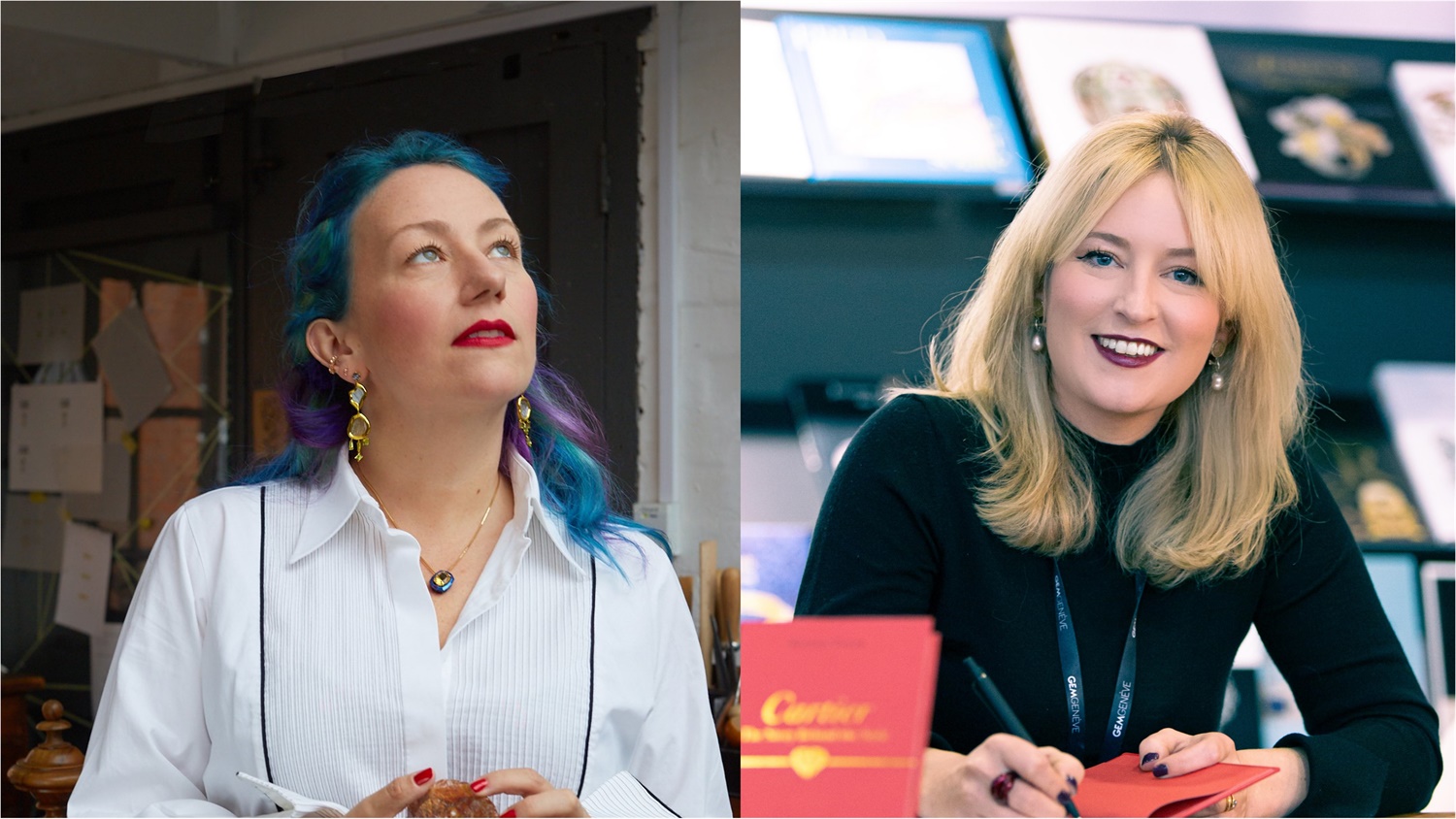
With 2023's campaign theme #EmbraceEquity, today is International Women's Day. Equity means creating an inclusive world. We mark this day – and continue for the next two days – by celebrating the achievements of successful women in our industry, who talk about their jewellery journeys, female empowerment and inequality issues.
RACHAEL TAYLOR, jewellery journalist, editor and author
Describe your jewellery journey up to this point in your career.
My first real step into the jewellery industry was as news editor at Retail Jeweller in 2008. After being made redundant a year later, I was approached by publisher ITP to launch a new jewellery business magazine, which would become Professional Jeweller. I also launched WatchPro magazine while at ITP, and we had lots of associated events, such as the Hot 100 project, that celebrated the faces of our industry.
After the birth of my second child, I became freelance to have more flexibility in my life. That baby turns nine this month, and I'm still freelancing. During these years, I've written for many publications, including The Financial Times, The Telegraph, The Independent, Rapaport and The Jewellery Editor. I also regularly contribute to Retail Jeweller and copywrite and consult for industry brands and retailers. Last year I published two books – Cartier: The Story Behind the Style and Tiffany & Co: The Story Behind the Style. I'm also a judge for many competitions, including The Goldsmiths' Centre's Spotlighting initiative and the UK Jewellery Awards. I am an ambassador for The Goldsmith Craft & Design Council and participate in many talks and events. I also co-founded The Jewellery Cut – a platform showcasing independent fine jewellery brands.
Would you say that being a woman has had an impact on your career? Do you think women have had to work harder to be more 'visible'?
I don't think women have to work harder to be more visible, but they tend to work harder to be taken seriously. I turned being underestimated early on in my career to my advantage. I was a young journalist looking for stories, and often people – and here, I'm afraid I'm mostly referring to older men – would often tell me things they'd perhaps have been too guarded to tell a man, i.e. a 'serious journalist'. Many were shocked when I wrote up what they'd said or shown me. Yet, I was a journalist, and they were on the record during an official interview, so why the surprise? It was because they were expecting a puff piece. This allowed me to get some great stories and carve out a name for myself in the industry.
Does the jewellery sector actually offer workplaces where women can thrive?
I think it does. There are so many inspiring women across our industry in all sorts of sectors – retail, design, and mining. There seems to be a sentiment, at the corporate level, to continue to champion the empowerment of women and remove any gender bias, so hopefully, this will only continue. Of course, there's a traditional hard core of the industry where women in positions of power are rare, and diversity, in general, is non-existent. I hope to see this shift in the coming years. After all, the majority of jewellery is made for women, so surely women should be heavily involved in shaping the product design, marketing and sales of these products, rather than boards full of men deciding what women want. It just makes sense.
Have you ever been in a situation where you have had to call out inequality?
When we had the Women's Jewellery Network, which sadly had to close down during the pandemic, this was exactly what we were doing. There were some – mostly men – in the trade who thought we hated men and wanted to knock them all off their perches and replace them exclusively with women. In fact, one jewellery manufacturer sent a memo to its female staff telling them not to engage with WJN when it first launched. Yet, all it was ever about was redressing the balance and pointing out inequality. Encouraging people to think about how their businesses were structured and perhaps making changes so all genders can thrive can only strengthen our industry. This should also apply to race, culture, religion, sexuality, and lifestyle; when you create a space where people feel safe and are supported to be the best, most true versions of themselves, good things happen.
What does 'female empowerment' mean to you? Does it allow the promotion of self-worth and/or the ability to influence change?
To me, it's about the freedom to pursue what interests and inspires you and what puts money in your pocket. This will look different for everyone. It's about removing any barriers – glass ceilings, stigmas, limitations, expectations, shame, guilt – that get in the way of that. It's also about being free to communicate who you are and what you want. Self-worth is such an important element of this; to know you're good enough and that you deserve a seat at the table can unlock so many doors. One of the biggest issues we, as professional women, face is a fear of asking for what we want and knowing our worth. It's incredibly rare to hear of men battling with imposter syndrome or panicking about asking to be paid appropriately because they fear they might be perceived as aggressive, greedy, vain, deluded, or stupid. Female empowerment is the ability to build your life and career without worrying about how you will be perceived and instead just focusing on your own growth, happiness and healthy boundaries.
SUSI SMITHER, FGA, GIA, founder, The Rock Hound
Describe your jewellery journey up to this point in your career.
I've been in the industry for 15 years, following a short course at Central Saint Martins, which got me hooked on making jewellery. I found the systematic process of polishing and the focus on detail particularly rewarding. My tutor, Martin Hopton, had his own jewellery school in Hatton Garden, so I went one day a week for four years. As I progressed, I started my first jewellery brand, SilverSmither. From there, I started to get commissions requesting gemstones.
At that time, gem dealers in The Garden were pretty daunting – with just a small shop and nothing out on show, I felt embarrassed not knowing the gemstone colours or even their names. The way I face such a challenge is to research, research, research. I found the GIA and enrolled for its Gemmology Diploma. From the first class, I knew this was for me – the geeky science matched with aesthetically beautiful coloured gemstones. I proudly became an FGA in 2011.
As I approached my final exams, I started searching for work in Hatton Garden and saw a job posted on GemA's notice board for a stock controller at Holts. I boldly walked in the next day and handed my CV to Jason Holt. My Maths & Management degree and love of spreadsheets helped! I spent the next three years immersing myself in the gem and jewellery trade from the inside.
Eager to keep learning about gemstones, I kept up to date by attending conferences and seminars whenever I could. During the Scottish Gemmological Conference, I heard about a field trip to Sri Lanka and jumped at the chance to get my hands dirty. During this trip, as I was visiting my first artisanal mine, the disparity between mine and market really hit me. The link had been consciously severed, allowing all manner of atrocities to take place whilst not affecting the marketing of gemstone jewellery. This didn't sit right with me.
I've always been a conscious consumer. Whenever possible, I think it's important to give back, and one way is to seek out Fairtrade products. When the time was right, I left Holts, applied for a Fairtrade license to sell Fairtrade gold and set about launching The Rock Hound with a foundation of responsible sourcing. In 2014 I took an intense eight-week Jewellery Design course at the GIA's London Campus – great training not only in design and traditional gouache rendering but the ethos of how to become an established jewellery designer. In 2015, with everything in place, I launched The Rock Hound.
By 2017 I'd made my mark with multiple awards, including the UK Jewellery Awards New Designer of the Year. This May, I'll have my ceremony to become a Freeman of The Worshipful Company of Goldsmiths. It's an honour to become part of our distinguished livery company, especially as it approaches its 700th anniversary. It's a doorway to helping support my beloved jewellery industry from within.
Would you say that being a woman has had an impact on your career? Does the jewellery sector actually offer workplaces where women can thrive?
Never once in my life have I felt, "If only I were a man". I love the tenacity needed to be a woman making her way in this world, and that's true within the jewellery industry too. I think this keeps you on your toes, and I've always got my sights on the next challenge. In an ideal world, things would be equal, but while we've still a way to go, we dig in and keep breaking barriers.
When I was working in Hatton Garden, there was definitely a generational divide, with the 'Old Boys' dominating our trade in the past. The jewellery industry had always been very secretive about sourcing, not wanting to share with competitors where their gemstones came from. The ethical jewellery movement is the exact opposite of that, and the fact that the majority of the movement is driven by women is interesting.
How easy was it for you to set up in business? What challenges have you had to overcome? Any advice for would-be start-ups/entrepreneurs?
When I started The Rock Hound, I'd already had a jewellery business, so I knew what to expect. It's a rollercoaster, and tackling many aspects of the business yourself is tough and can often be lonely. This time around, I instinctively knew when it was time to enlist the help of others. I was quicker to take on an assistant pre-launch, which moved things along quicker and made everything more fun.
I enlisted consultants Levin Sources to help me create a code of conduct which solidified what I was trying to do. I knew I wanted to have an ethical jewellery business, but ten years ago, there was so much differing information out there that I found it hard to sift through it and know what mattered most. I now have the language to reach out to suppliers and make sure we are on the same page.
The final challenge has been marketing to consumers. Making beautiful jewellery is often the easy bit; it's getting the word out there and making the sales I find much harder. When the time was right, and my brand was strong, fate found me my sparkling PR Natalia Cassel, who's given me a push in the right direction and opened avenues I'd not even thought about.
Taking advice where possible can help you overcome obstacles, and I had a business mentor when I was starting up who helped me structure my brand. Now it's time for me to give back, so I'm proud to be a judge and mentor for Bright Young GemsÒ for the past three years. It's a privilege to glimpse so much talent, and I love talking with our winners who've recently graduated.
Having a chance to step back, look at your options and think about your journey so far can help you decide the best direction to take next. And remember how key networking is, as is staying in touch with colleagues and peers. Not only for the people you meet at the time but the paths people's careers will take; it can be invaluable to reach out in the future.
Have you ever been in a situation where you have had to call out inequality?
As a bisexual woman, I've seen plenty of inequality. I think as you get older, it's easier to call things out as you see them; you gain more confidence in your own skin, so you know if a situation feels off and to speak up. I now naturally surround myself with strong women and men who are equality advocates, which makes for a rich working life.
What does 'female empowerment' mean to you? Does it allow the promotion of self-worth and/or the ability to influence change?
I'm all about Girl Power! I'm fiercely proud of being a woman and a mother. You get a totally different perspective when you're bringing up children and explaining the inequality of the world around them, especially with my daughter. It's our job to help nurture their true selves so they can stand tall and make incremental changes on a daily basis. They are the future.
Read Part 1 of our International Women's Day Series
Read Part 2 of our International Women's Day Series
Source: NAJ Online