Meet The Creatives: Ute Decker
05 Jun 2020

Belinda Morris talks to London-based artist jeweller Ute Decker, who earlier this year won the NAJ Gold Award for Fairtrade Jewellery at the Goldsmiths’ Craft & Design Council Awards. Ute’s distinctive, expressive, sculptural pieces can be found in Museums such as the V&A as well adorning discerning collectors worldwide.
Describe your venture into the world of jewellery? When and how did it happen?
I was 40 when I first exhibited my work - not really a youngster. My background started with studies at the Sorbonne, then a degree in political economics – I worked as a linguist and dabbled in journalism with stints at the UN and CNN.
But during all this time there was always a creative urge; taking courses in sculpture, philosophy, photography, ceramics, silversmithing, jewellery and numerous others. It was, however, jewellery that I returned to again and again for over 20 years.
Eventually, in 2009 I accepted an invitation to take part in a small group exhibition. The reception was so amazing; it gave me the courage to set up a full-time studio and focus on my artistic practice.
When did you start making and selling jewellery commercially? Was it direct to the consumer – ie bespoke work – or to the trade?
Initially, I was honoured to be working with many galleries, later I reduced this to one main gallery and occasionally taking part in special exhibitions with other galleries. Today, I mostly sell to private clients and collectors.
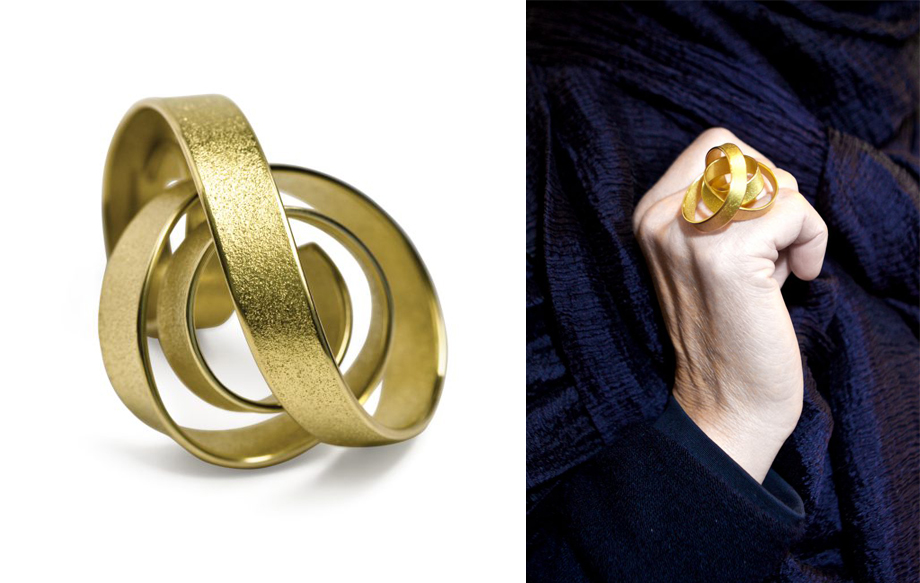 Image: Ute Decker Rose Hand Sculpture
What was the inspiration for what you were making? How does the design process begin?
My studio is filled with shelves and drawers full of maquettes. For me the most exciting part of the process is when I start with a length of garden wire sculpting a line and empty space and the piece begins to take form – full of movement and energy. Forms that speak to me, that make me dance in the studio. These ideas then continue to mature over months or sometimes even years.
From there I make brass maquettes. I’m often seen wearing these test pieces, taking them off in the middle of dinner to make adjustments. This stage can be a challenge but it’s vital to give these sculptures such wearability and perfect balance on the body.
I make the same shape over and over again until I have developed an intuitive relationship with the form, until I feel, I can just pick up a strip of metal and shape it in one continuous movement – like the well-practiced but seemingly effortless brushstrokes of Japanese calligraphy.
Of course, there are many abandoned maquettes and ideas, very few make it to this stage. This free, serendipitous approach means each piece is different and unique, even within an edition.
During that period my assistant has started to prepare the metal for me, texture pieces of silver or gold, file the edges, sanding down and polishing up – ready for the day when I feel the muses are with me to create the final piece.
What inspires you?
I am often drawn to the dynamic form of the spiral as a starting point. It has been powerfully used in African tribal arts, by the Celts, the Incas to Man Ray and Calder. For me it is a rich symbol of our common humanity across the ages, across continents and cultures. In Japan I admired the thoughtful craftsmanship, the paired down aesthetic and the uncluttered attention to the smallest detail. My Calligraphy series of brooches is inspired by a love for Japanese calligraphy.
You were one of the first art jewellers globally to use Fairtrade Gold. Tell us more…
My gold pieces can be traced all the way from the artisanal mining cooperative in the highlands of Peru to my bench in central London. The amazing work of the artisan miners of Macdesa – the source of my Fairtrade Gold – ensures that the gold is mined in an as sustainable and ecologically sound way as possible, thereby preserving the environment for future generations. Fairtrade also promotes gender equality, guaranteeing women representatives are involved in all key community decisions, helping to build financial independence.
I am happy to pay a Fairtrade premium for my gold, which is guaranteed to go directly to investing in the community.
 Image: Ute Decker Articulation Neck Sculpture
What is your design and working ethos? What matters to you?
Jewellery is my medium of telling a story, of making connections and working as ethically and sustainably as we can is one of the most urgent stories of today.
From the mindful sourcing of materials to only using non-toxic chemicals in the studio – I try to think carefully about my work, its context in society and the world we live in. A guiding principle is a quotation attributed to Gandhi: "Be the change you want to see in this world"
Being passionate about sharing my knowledge and facilitating change, I unite my artistic practice with a committed social engagement. My website has become the world's largest resource on sustainable jewellery practices.
Since 2018 this can be found at ethicalmaking.org a dedicated website created in partnership with the Incorporation of Goldsmiths, Scotland. It’s used by thousands of students, jewellers and consumers around the world.
Having become a pioneer of the international ethical jewellery movement, I regularly give talks and workshops on the subject. Fairtrade Gold is such a beautiful and empowering story. To me this connectedness adds an important layer of meaning.
As an individual, I might feel anything I do is just a drop in the ocean. This may be so but we have to remember the ocean is but an accumulation of endless drops. Each one of us is one of these drops.
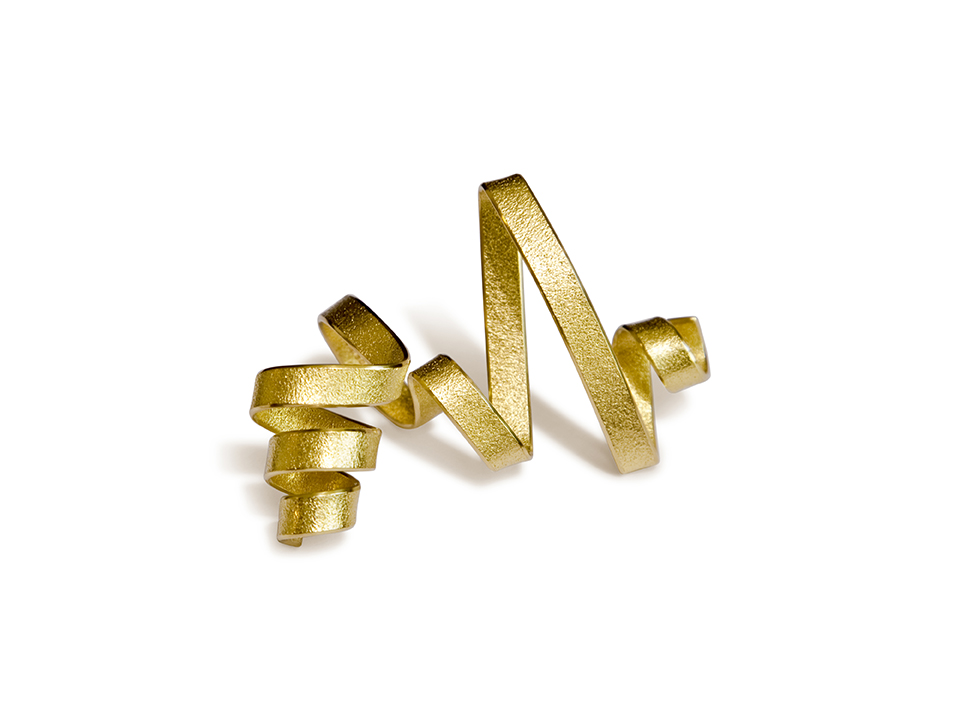 Image: Ute Decker Rose Hand Sculpture
What are the key lessons that you have learned? What advice can you give to jewellery designer makers starting out…
Make every piece count, always do your best work and most importantly don't follow trends but stay authentic and develop your own design language.
And please take a holistic approach; think of the social, economic and environmental impact and story of your work. I can highly recommend visiting ethicalmaking.org
Covid-19 aside, how important is on-line and social media for your business?
Not at all in terms of selling. But social media is useful to see what others are doing and others to see what you are doing – you never know who might be watching you.
And how are you keeping busy during lockdown?
Long overdue – I am working on a new website.
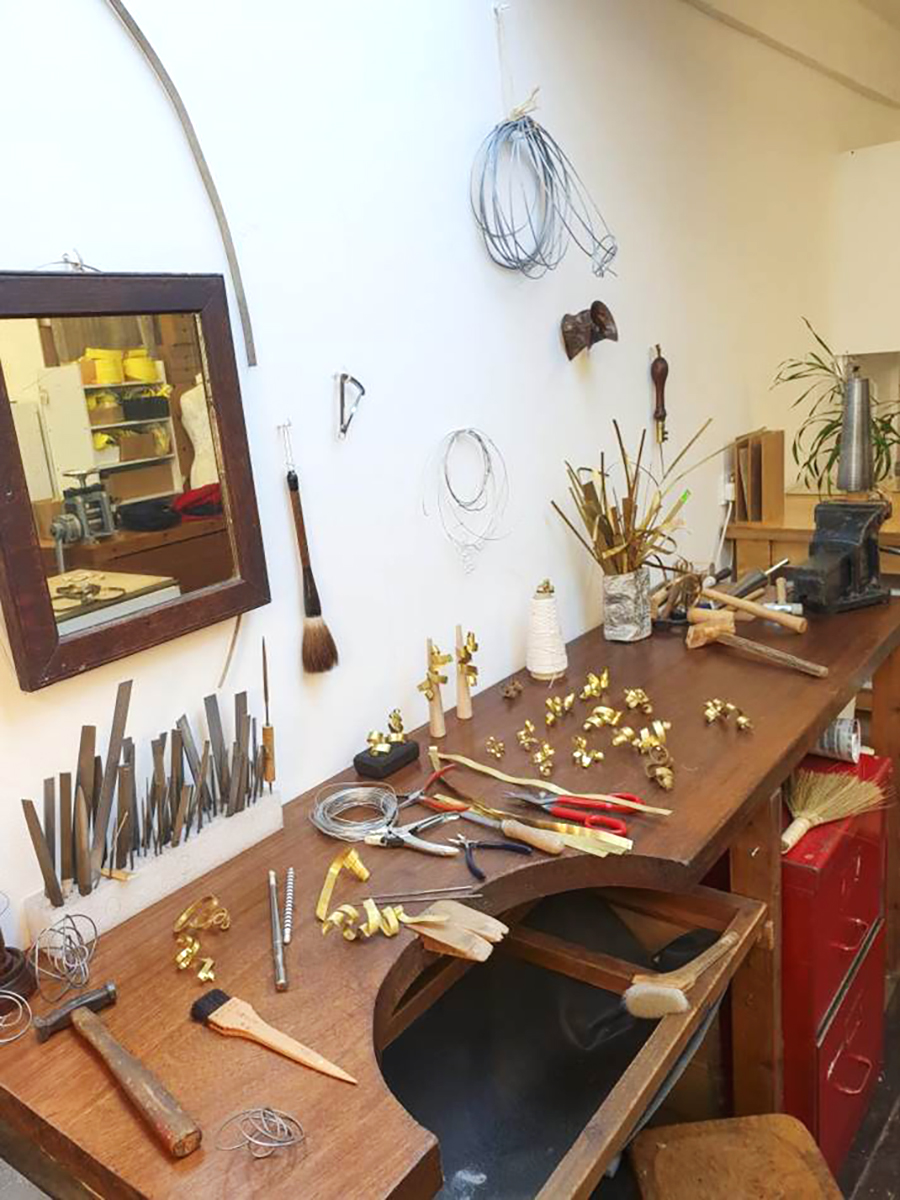 Image: Ute Decker's studio
Stay inspired
For more inspiring stories sign up to the NAJ Mailing List! We'll keep you up to date on the latest in the jewellery industry.
Join the NAJ Mailing List
Source: The National Association of Jewellers