Previewing the Winter issue of The Jeweller - Trick or Treat?
28 Oct 2021
Enjoy an early look at an article from the upcoming Jeweller magazine.
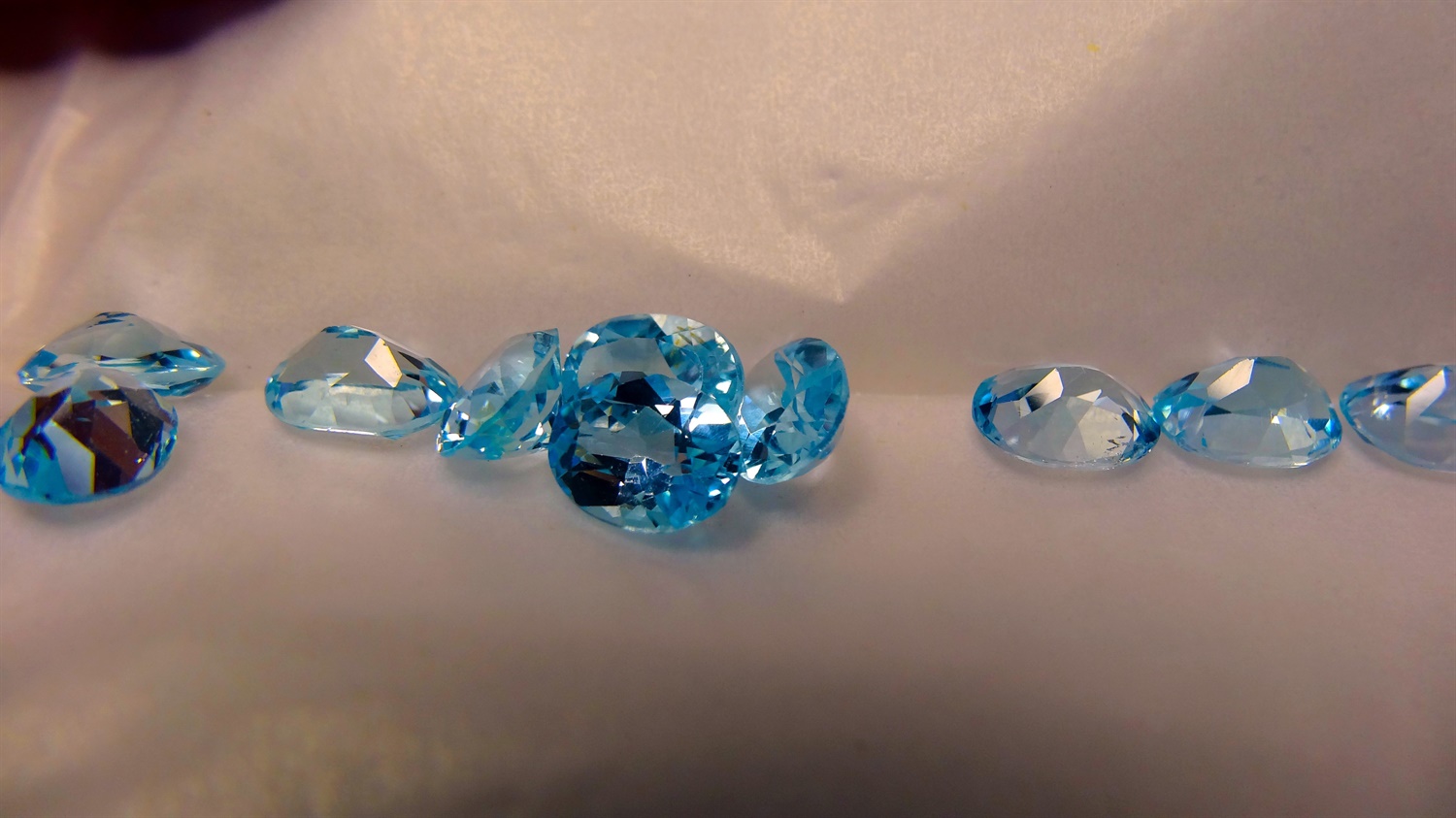
Gemstone treatments are they a trick or do they work a treat? Kerry Gregory of Gemmology Rocks has the answers.
In my last feature for The Jeweller I discussed the importance of knowledge and disclosure, and the prevalence of gemstones on the market being sold without either! Now we’re taking a closer look at just one facet (pun intended) of gemstones – treatments. Are they all bad? Are they all tricks? To answer the question we need look fully, from a few angles, gain all the information and test the subject – just like with any gemmology. In my opinion, like most of gemmology, it’s not a simple, yes or no, right or wrong, this or that, answer.
What?
To start at the beginning – what is a gemstone treatment? Quite simply it is any process carried out on a gem material other than simple cutting, polishing or fashioning. Gemstone treatments are not a new or modern thing; as long as we’ve had gemstones, we’ve had gemstone treatments; ways in which their appearance and properties can be altered. Gemstone treatments are well documented, in terms of what and how they were carried out, in historical texts as early as 2,000 years ago. There are finds of treated gemstones from at least as early as 1300BC. Dr. Kurt Nassau covers this subject wonderfully in his book Gemstone Enhancement (1984) and in a GIA article ‘The Early History of Gemstone Treatments’ of the same date, if you want to delve more into this fascinating subject.
How?
The ways in which gems can be treated are numerous, and vary hugely in terms of complexity of process and identification. They range from crude and simple processes like painting, coating, dying or foiling gemstones, to more complicated heating and filling processes, then more time- and resource-consuming processes like diffusion or irradiation. Many modern treatments are still carried out the way they were thousands of years ago, for instance heating a gem in a ball of dung. Many are complicated multi-stage processes involving a number of different steps, pieces of equipment and additives. Understanding how gems form, the science behind colour and other properties helps gem treaters when working out ways to use this science to create changes in the starting material. It’s also essential for any of us at the back end, when trying to identify treatments. Often the cruder or simpler the treatment the easier it is to spot, and conversely complex and modern treatments often need complex and modern methods to identify them as well.
Why?
Why are gemstones treated? There’s more than one reason, and here’s the bit that can be seen as good or bad in my opinion. Sometimes gem treatments were discovered by accident; there are many apocryphal stories about gems falling into fires or ovens, buildings burning down, stones or chemicals being mixed in containers used for treatments, cutting or repair, and other ‘accidents’ that caused gemstones to look different (usually better!) than they did before. This then prompts a realisation that this could be done on purpose to create a similar change. Many treatments are a result of years of research, experiments and trial and error. A good friend of mine, a peridot dealer (a stone which is notoriously difficult to treat) is dreaming of the day when someone comes up with a way to improve the material, because then he’ll be able to use and sell more of it, and for higher prices.
This is the crux; treatments are primarily designed to add value to a product. You wouldn’t spend time and money doing something to your product if it devalued it – which is what people are often confused by, stating that treated gems are worth less than untreated gems. This is simply not true; effective treatments always add value to a product. What is true, is that generally an untreated gemstone will be higher value than a gemstone that looks the same but has to be treated to achieve that.
So, treatments are not necessarily designed to deceive, but absolutely, and throughout history, many treatments have been carried out so that a buyer will be deceived into believing that a stone is a better quality, more valuable or even different stone entirely, and therefore be willing to part with considerably more money for this improved stone than they would have before the treatment took place. However, in reality, if it weren’t for gem treatments, we might not have any gemstones, and we certainly wouldn’t have the range of colours, sizes and price points we can currently choose from.
Many of the common commercial gemstones on the market are routinely and commonly treated. Almost always ruby and sapphire are heated, emerald is filled, turquoise is stabilised and blue topaz is irradiated. This is to either improve colour, clarity or durability, and therefore desirability of the gem, or all three. It’s often a simple case of economics. Most mines, regardless of mining technique, produce a range of material qualities. Whether panned for in rivers or dug out of the ground, most gems gone through will be discarded because it’s just rock, dirt, or gravel. Even that material that can be used for something, ordinarily a huge percentage will be used for industries other than the gemstone industry.
The vast majority of gem production will be low quality commercial material, with a small amount of good quality commercial material, a tiny amount of high-quality gems and a minute proportion of fine goods. Finding a way to use the low quality material, means being able to afford to get out, use and sell the high quality stuff. It’s very uncommon that gems come out of the ground in beautiful and highly saturated colours, with high clarity, unincluded and unfractured or fissured – those that do are therefore incredibly desirable, valuable and rare.
The rest need a little help to look their best. Many humans enhance their natural features with make-up, dyes, clothes. We paint, wax, fill ourselves to look better and last longer! Similarly lots of natural products are ‘treated’ to make them prettier and more durable. Wool, cotton, leather, wood… are regularly dyed, painted, waxed, impregnated to change their colour and make them suitable for use in everyday functions and make them last longer. It makes sense doesn’t it? It also makes sense for gemstones, but people are very often horrified by the thought, which when you look at it this way makes no sense at all!
So it is good or bad?
Whether a treatment is a good or a bad thing comes down to knowledge and disclosure. Personally, I think gemstone treatments are brilliant – they give us the opportunity to maximise these natural resources. They give the otherwise unsaleable allure and value, offering consumers choice and businesses more chances to thrive. As long as everyone in the chain a) knows what they’ve got and b) tells each other openly and honestly what it is. As long as everyone is given the choice and given the information they need to make an informed decision, ie they know what’s happened to their gemstone, and they’re ok with it, treatments are not bad. Only when this doesn’t happen is it bad.
What should you do
As a professional you do have a responsibility to know: know what you’re buying and what you’re selling. That means keeping up to date with the market, with treatments, with identification – you cannot spot what you’re not looking for. This can sometimes be managed by buying from only known and trusted sources and having a robust chain and assurances from suppliers. It can be managed by ensuring you send everything you buy to a laboratory for checking – if you have the time and money – or testing everything in-house if you have the knowledge, skill, equipment and time. Sometimes you can use a combination of these and spot check a percentage of purchases from each source.
In terms of disclosure, as an industry we follow guidelines from CIBJO as to how to discuss, define and disclose gemstones. The rules are all treatments must be disclosed. You must tell your customer about all and any treatment on their gemstone. How you are supposed to do that differs depending on the stone and treatment. Some treatments require only ‘general disclosure’ – you just need to informally make the customer aware of the treatment, in conversation, as part of a description, or a footnote on an item for example. This is usually for ‘traditional’ treatments, like colourless waxing of jadeite, heating of corundum and other gems or filling of emeralds.
The majority of treatments however need ‘specific disclosure’, meaning in theory the treatment must form part of the description of the item, immediately preceding the gemstone name, be as conspicuous as the gemstones name and be in all descriptions and on sales paperwork for the item. In practice this rarely happens. How many items do you see described as ‘irradiated blue topaz’ for instance, in windows, on websites or on sales receipts or invoices? Don’t shoot the messenger, I don’t have all the answers to this, because it is an incredibly complicated subject. What I do know is we all want to do our best, so we need to work to make this work!
In a following issue I’ll outline the common treatments in the market, what to look out for and ways you might start to recognise these if you come across them.
Source: The Jeweller Magazine