Q&A: JBN Congress Speaker Howard Levine on Getting Diamond Savvy
06 May 2022

Can you grow the presence of your jewellery business using laboratory-grown diamonds? Ahead of his talk at the JET Business Network’s annual Retail Jewellers’ Congress on Monday, June 13, 2022, Howard Levine, Managing Director of Diamnet and laboratory-grown diamond jewellery brand, Hayes & Lake, discusses prices, ‘greenwashing’ tactics and product awareness with us.
Discover the NAJ Summit 2022
At the Retail Jewellers’ Congress, part of the second annual NAJ Summit 2022, Levine will seek to answer some of the trade’s burning questions about laboratory-grown diamonds, including:
- Can I introduce laboratory-grown diamonds without damaging natural mined diamond sales?
- What is the difference in price and what will happen to prices in the future?
- What is the impact of laboratory-grown diamonds on the second-hand market?
- How should I talk to my customers about laboratory-grown diamonds?
To start tackling this big topic in the sector, we asked Levine to answer our pre-NAJ Summit questions. Here, we scratch the surface, but we recommend visiting Levine at the Gemstone Marketplace on Saturday, June 11, and Sunday, June 12, to discuss the issues further with him.
Do you think there is still concern among retail jewellers that laboratory-grown diamonds (LGDs) and natural diamonds can't be sold side-by-side? Do you think these attitudes are changing?
The short answer is, yes, there is still concern but it is changing. I understand the worry of introducing LGDs into a retailer's stock and how that could affect the sales of the natural mined diamonds, but there are thousands of pounds worth of sales being lost and so many new customers being sent away. The reality is that retailers who stock LGDs alongside mined diamonds find that there are two different customer bases. Those who value the history and provenance of natural mined diamonds and those who either want a larger diamond for their money or those that actively do not want to buy diamonds mined from the earth.
Read our Diamond Terminology Guideline
Of course, there is a small crossover, but more and more customers are actively looking for LGDs due to their own set of principles. These customers will not purchase mined diamonds and by ignoring LGDs, those customers are being forced to purchase elsewhere. There has been so much positive mainstream press around LGDs, and retailers are not immune to that. They see how their customers' attitudes have changed, leaving them no choice but to find a solution to selling the two categories side by side.
How concerned are you about ‘greenwashing’ tactics? How prevalent do you think this is and what would be your advice to retailers looking to market their laboratory-grown diamonds in the right way?
There is an insatiable desire from the public to buy responsibly. This has led to several online retailers who claim to specialise in what they call "Ethical and Sustainable Diamonds". They remind their customers of the undoubtedly dubious ethical practices that some mining companies were using in the past and they make it seem like it is still happening today. They purposely ignore the good being done today, how the natural industry has changed and the many livelihoods and communities [diamond mining] supports.
I do believe that this is ‘greenwashing’ as it is done purely to promote their own agenda. The thing is that they are very good at it. Up until only a couple of years ago, the natural mined industry's reaction to this onslaught was very arrogant. They treated LGDs with a degree of contempt, concluding that they would never compete with a "real" diamond. Tone-deaf to the desires of their own target market, I believe they allowed the anti-mined diamond rhetoric to take hold. Instead of listening to their consumers, they chose to mock LGDs, claiming they were not "real", promoting them as fake.
It is only with the introduction of the Natural Diamond Council that we now see the benefits of natural mined diamonds being actively promoted. I would say it is too little too late as LGDs already have a strong hold on the public, which is only getting stronger. I advise retailers to promote the benefits of both. It is not the job of any retailer to tell their customer what to buy but rather to explain the differences and let them decide for themselves. As in all sales situations, knowledge is power. Retailers need to understand the messages that are being promoted by both industries and not get involved in the politics of either. Retailers who help their customers to choose without prejudice will see their diamond sales increase dramatically.
What are the current differences in prices and what do you think will happen to pricing in the future?
A simple way to look at it is to say that LGDs are roughly a quarter of the price of their natural alternatives. This gap may decrease slightly with smaller stones and increase with very large diamonds. This is fantastic as it gives a valid choice to the consumer. Talking to the suppliers we deal with daily, the price has stabilised, after falling dramatically from when jewellery grade LGDs were first introduced. We are being told that diamonds up to one carat are now running close to cost and so prices have stabilized. I believe that as LGDs grab hold of the mainstream, natural mined diamonds will increase in value as the top end of the market continues to covet the natural alternative.
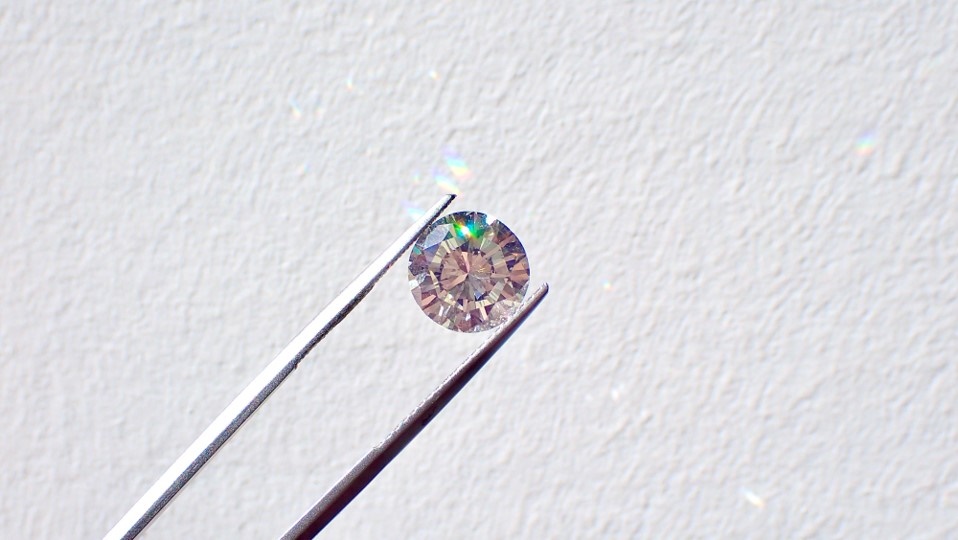
In your experience, do customers understand what laboratory-grown diamonds are? Is there enough information about them being shared by jewellers?
There is a huge amount of information out there about LGDs but very little comes from independent jewellers, pushing consumers online. Jewellers who embrace LGDs and promote their benefits see increased diamond sales. Consumers need to be offered the choice from a retailer who has no bias. This is what is expected from a high street jeweller, and this presents a key advantage to the customer compared to buying online.
What are some of the pitfalls for retailers to avoid when selling laboratory-grown diamonds?
A common mistake I see retailers making is believing LGDs are nothing but man-made cheaper diamonds. The correct way is to promote the benefits of both with confidence and without prejudice. Retailers must remember that their job is to make sales and must have faith in their customers to make the right decision for themselves. State the benefits, provide the choice and make the sale.
About Howard Levine
Howard Levine started his jewellery career at Euro Pearls in 1990. After nearly 14 years, he was headhunted by H. Chalfen Ltd, one of the most highly regarded diamond jewellery manufacturers in the UK. Eight years later, he was headhunted again, spending the next two years as the UK director for a large Indian jewellery manufacturer where he adapted some of the most innovative jewellery marketing from the US for UK retailers. Eventually, H. Chalfen was sold, and he returned as managing director, but Levine was convinced that the internet could no longer be ignored. After only four years, Levine’s B2B platform, Diamnet, lists over 250,000 diamonds, both natural and laboratory-grown, from suppliers across the UK and abroad. Recently, Diamnet launched the brand Hayes & Lake, introducing quality UK manufacturing with laboratory-grown diamonds to the UK high street.
Find out more about joining the JET Business Network here. Reach out to an existing JBN member to get first-hand advice about joining by emailing: michael@thevalueinnovator.co.uk.
Discover the NAJ Summit 2022
Visit Diamnet
Source: National Association of Jewellers